

Jean-François Cottier, Professor at Université Paris Cité is hosting Professor Eric MacPhail from Indiana University based in Bloomington, United States. Our two researchers are Erasmus specialists, a Dutch humanist and one of the greatest thinkers of the Renaissance. Together, they will co-publish an issue of the journal “Erasmus Studies” on the question of religious tolerance in the writings of Erasmus. Watch their video and learn more about their research project!
For more information
International Guest Researchers Programme
© Jean-François Cottier et Eric MacPhail
About
Jean-François Cottier, is professor of Latin language and literature at Université Paris Cité, head of the Master of Letters, Arts and Humanities, at the French Literature, Art and Film Studies Department (LAC) and co-director of the “Thélème” axis. He is an elected member of the Scientific Council of the LAC department and Associate Professor at the University of Montreal. He has published several books on medieval and neo-Latin literature: spiritual and monastic literature, humanist exegesis of the Bible, treatises on play, Latin texts from New France. He is the editor for ASD (Amsterdam) of Paraphrases on the Gospels by Erasmus.
Eric MacPhail is a professor at Indiana University, Bloomington in the Department of French and Italian. He is a specialist of the Renaissance and has worked on Rabelais, Montaigne, and the Pleiades as well as on Erasmus and Renaissance humanism. He is currently editor of the journal “Erasmus Studies”. Each year he organizes two major conferences on Erasmus: the Margaret Mann Phillips Lecture and the Roland Bainton Lecture. His most recent book, “Religious Tolerance from Renaissance to Enlightenment: Atheist’s Progress (Routledge, 2020),” examines the relationship between the status of atheism and the theory and practice of tolerance in Europe from the beginning of the Reformation to the aftermath of the Revocation of the Edict of Nantes.
Read more
Phages, Towards a Targeted Alternative to Antibiotics
With the rapid development of antibiotics in the 1930s, phage therapy – using viruses known as bacteriophages or phages to tackle bacterial infections – fell into oblivion. But as the current rise in antibiotic resistance is making it increasingly difficult to treat...
![[Circle U.] Apply for the 2025 winter schools](https://wordpress-test.app.u-pariscite.fr/wp-content/uploads/2024/11/ECOLE-DHIVER-1080x675.jpg)
[Circle U.] Apply for the 2025 winter schools
Would you like to spend a few days in Europe as part of your studies? The Circle U. European Alliance is organising two winter schools on the themes of sustainable oenology and artificial intelligence. Find out how to apply! Sustainable “WINE” Intensive week from the...

Highly Cited Researchers 2024: 26 citations for Université Paris Cité
Clarivate has released the list of 126 scientists whose first affiliation is with a research institution based in France and who are featured in the 2024 ranking of the 6,886 most highly cited researchers. With 26 first-affiliation mentions, Université Paris Cité has...
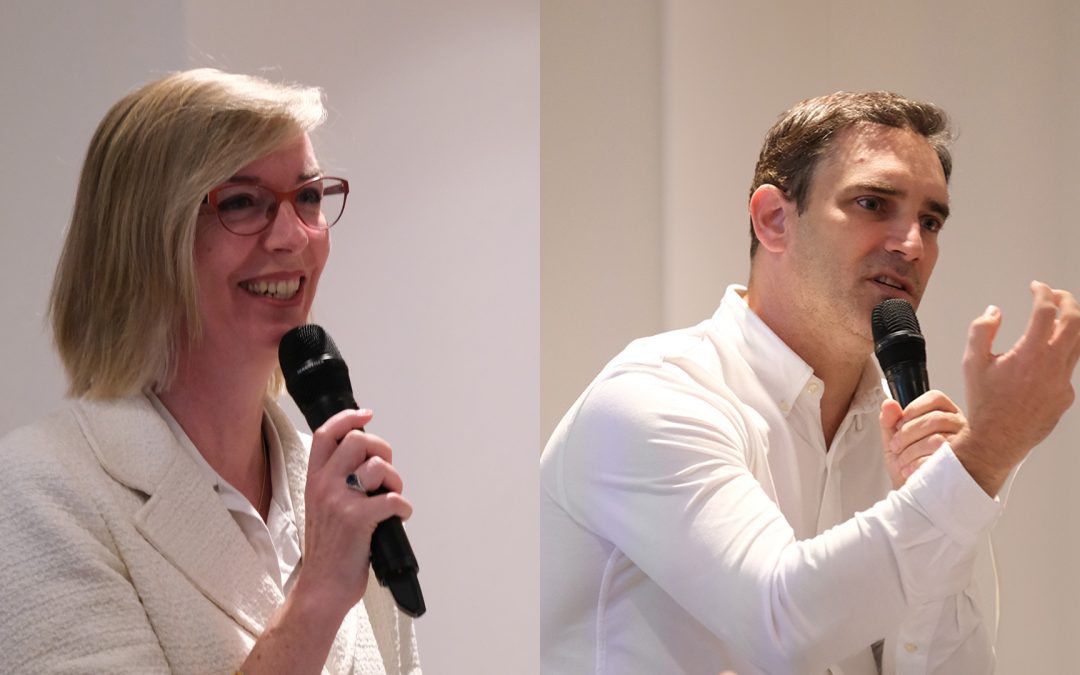
Looking back at The Guild conference: Artificial Intelligence in Higher Education and Research
On November 6th 2024, Université Paris Cité and Université PSL brought together the communities of The Guild of European Research-Intensive Universities for an event about artificial intelligence and its impact on universities, at the PariSanté Campus. Stéphanie...