

Meet two scientists who are exploring a new line of research on gravitational waves, Professor Sylvain Chaty from Université Paris Cité, astrophysicist, at the APC Laboratory (Astroparticle and Cosmology) welcomes Federico Garcia, researcher from Conicet (National Research Council) at the National Institute of Radioastronomy (IAR) in Argentina. Discover their research project!
About
Sylvain Chaty is an astrophysicist, professor at Université Paris Cité, in the APC Laboratory (Astroparticle and Cosmology). He is also an honorary member of the Institut Universitaire de France, a specialist in stellar evolution and binary systems including a compact star, such as a neutron star or a black hole, and a professor of exobiology (appearance of life on Earth, search for life in the solar system, and in exoplanets). He is a member of several international collaborations: Virgo collaboration for interferometric detection of gravitational waves, CTA observatory for high-energy sky observation, Fermi satellite (NASA) for gamma-ray sky observation.
Federico García is an assistant researcher at CONICET (National Research Council in Argentina) since September 2021. In 2016, he received his PhD in Astrophysics from the University of La Plata, Argentina, working on theoretical models and X-ray observations of neutron stars. After a postdoc at the Argentine Institute of Radio Astronomy, he moved to Paris where he was hired as a LabEx postdoc at University Paris Diderot and CEA-Saclay for two years (2017-2019). He worked on an interface project under the supervision of Sylvain Chaty (AIM), E. Porter and E. Chassande-Mottin (APC) on progenitor models of binary black hole mergers. He has also been a PostDoc at the University of Groningen, in the Netherlands between 2019 and 2021. Currently, he has published more than 40 papers in peer-reviewed journals, being the first author of 11 and second author of 9 of them.
For more information
International Guest Researchers Programme
Read more
Phages, Towards a Targeted Alternative to Antibiotics
With the rapid development of antibiotics in the 1930s, phage therapy – using viruses known as bacteriophages or phages to tackle bacterial infections – fell into oblivion. But as the current rise in antibiotic resistance is making it increasingly difficult to treat...
![[Circle U.] Apply for the 2025 winter schools](https://wordpress-test.app.u-pariscite.fr/wp-content/uploads/2024/11/ECOLE-DHIVER-1080x675.jpg)
[Circle U.] Apply for the 2025 winter schools
Would you like to spend a few days in Europe as part of your studies? The Circle U. European Alliance is organising two winter schools on the themes of sustainable oenology and artificial intelligence. Find out how to apply! Sustainable “WINE” Intensive week from the...

Highly Cited Researchers 2024: 26 citations for Université Paris Cité
Clarivate has released the list of 126 scientists whose first affiliation is with a research institution based in France and who are featured in the 2024 ranking of the 6,886 most highly cited researchers. With 26 first-affiliation mentions, Université Paris Cité has...
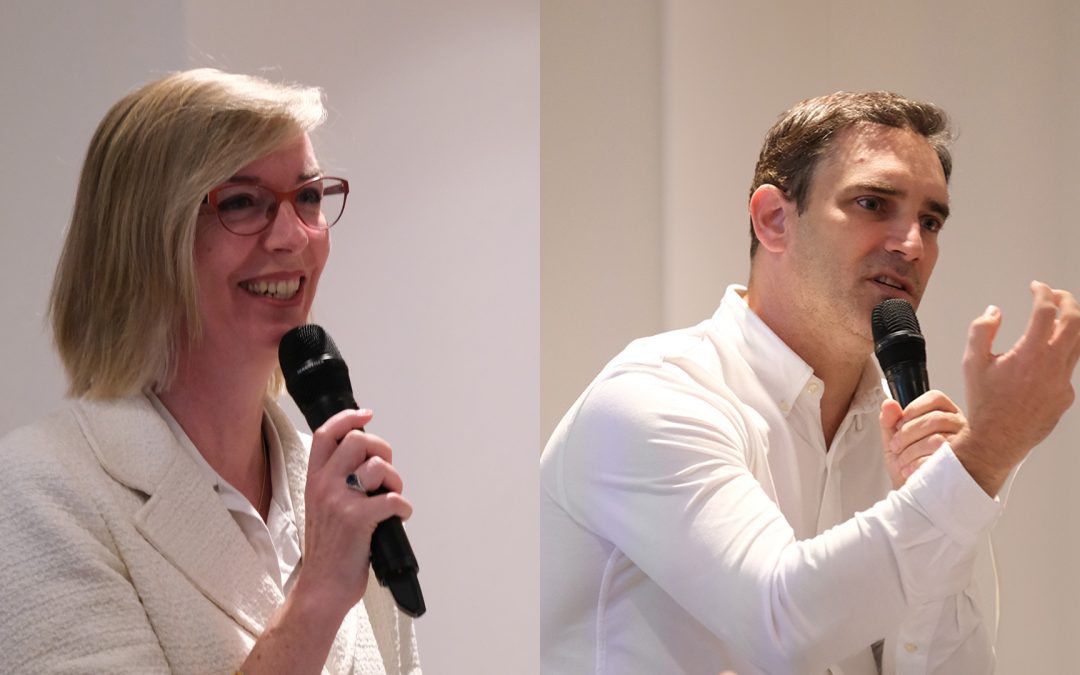
Looking back at The Guild conference: Artificial Intelligence in Higher Education and Research
On November 6th 2024, Université Paris Cité and Université PSL brought together the communities of The Guild of European Research-Intensive Universities for an event about artificial intelligence and its impact on universities, at the PariSanté Campus. Stéphanie...