

This section is reserved for presentations of WEMov’s early career investigators (ECIs). For this first newsletter, we chose to feature our two colleagues in charge of drafting the newsletter.
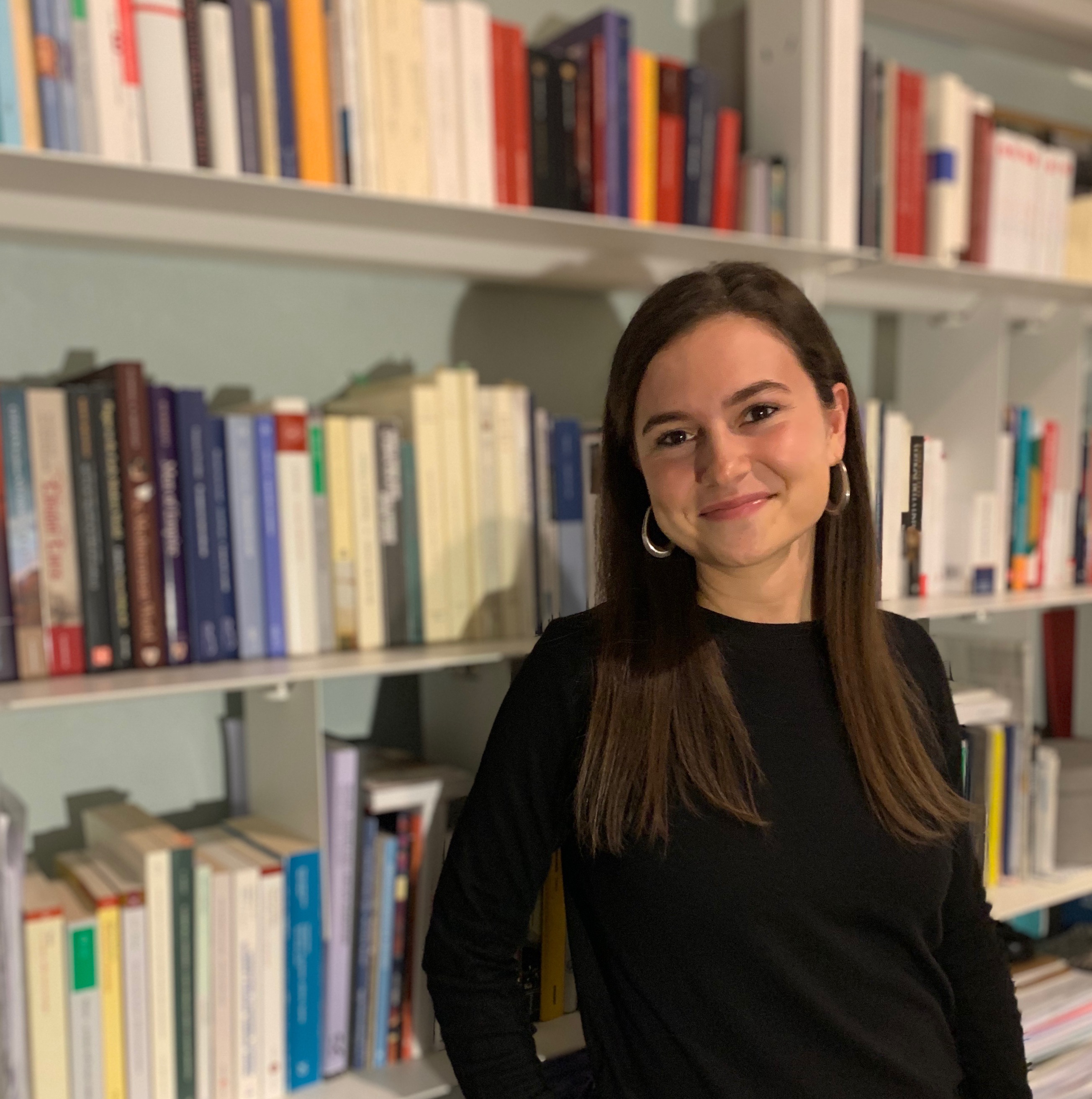 Teresa Bernardi holds a PhD in Early Modern History. She first studied at Ca’ Foscari University of Venice as a graduate student and then she attended the Scuola Normale Superiore of Pisa as a PhD candidate. During her PhD (2015-2020) she also spent time abroad as a visiting student at the École Normale Supérieure in Paris and at the University of Cambridge, where she participated in the study and research activities of CAMPOP (The Cambridge Group for the History of Population and Social Structure). Her research interests span various fields of social, cultural and legal history. Her current research concerns practices of registration and identification of foreigners in Early Modern Venice, with a particular focus on women’s mobility and gender relations. She is now a member of an international programme funded by the French National Research Agency (ANR) and supervised by Prof. Jean-François Chauvard (Université Paris 1 Panthéon-Sorbonne). The research group’s overall objective is to explore the relation between marriage and human mobility both from a qualitative and a quantitative perspective. Teresa Bernardi has recently been awarded the “Achille and Laura Gorlato Prize” for her PhD thesis by a prestigious Venetian Cultural Institution (Ateneo Veneto).
She has published her work in such journals as Genesis and Gender & History. She also wrote a book chapter in Beatrice Zucca Micheletto (ed), Gender and Migration in Historical Perspective: Institutions, Economic Resources and Social Networds (16th-century to 20th century), forthcoming.
Teresa Bernardi
Postdoctoral Researcher, University of Padua (Mobility and Humanities Centre)/ANR project “Marriage and Mobility in Venice (late 16th–18th centuries) – Processetti”. Contact: teresa.bernardi[at]unipd.it
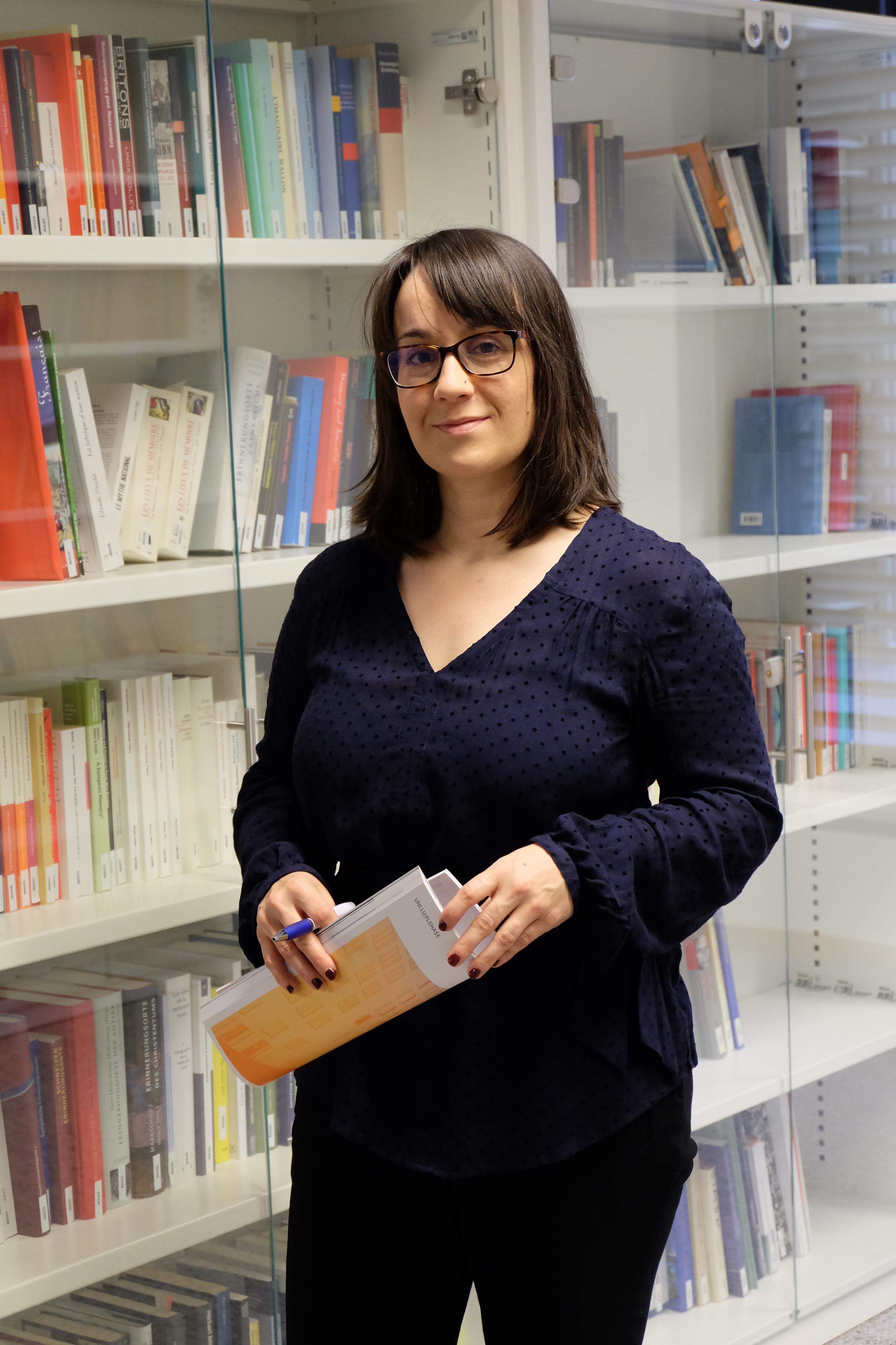 Heidi Rodrigues Martins holds a Ph.D. in Social Sciences from the University of Luxembourg (2019) which was dedicated to understanding the (re)construction of the feelings of (un)belonging across the life course among Portuguese “second-generation” in Luxembourg. Before that, she completed two Master’s degrees: one in Communications, art and culture at the University of Minho, Portugal (2011-2013) and another one in Sociology and anthropology at the Catholic University of Louvain, Belgium (2013-2014). She also spent a year as an Erasmus student at the University of Luxembourg (2012-2013). At that time, she worked on urban spatialities, temporalities and (im)mobilities. Today, she works as a researcher at the Centre de Documentation sur les Migrations Humaines (CDMH), Dudelange, Luxembourg, in which she is responsible for the project “Moving Lusitalia” – a project within the European Capital of Culture 2022/ Esch2022, dedicated to grasp and (re)construct the history of the “Quartier Italie” in Dudelange, namely through a rhythmanalysis; and to design an exhibition retracing that same multivocal and polyphonic history.
Her main research interests revolve around (im)mobilities, migration, (un)belongings, identities, urban spatialities and temporalities. Her methodological approach is qualitative, ethnographic and comprehensive and her theoretical framework relies on intersectionality, (trans)nationalism and life course and relational approaches.
She has published in several journals such as Global Networks, In Cidades, Comunidades e Territórios and Vieira, F. Costa et P. Remoaldo (eds.), Cidades, Criatividade(s) e Sustentabilidade(s), among others.
Heidi Rodrigues Martins
Sociologist/researcher, Ph.D., Centre de Documentation sur les Migrations Humaines (CDMH), Dudelange, Luxembourg. Contact : heidi.martins[at]cdmh.lu
À lire aussi
Prix Irène Joliot-Curie 2024 : Marie Verbanck récompensée
Créé en 2001 par le Ministère de l’Enseignement supérieur et de la Recherche, le prix Irène Joliot-Curie récompense chaque année des femmes qui se distinguent par la qualité de leurs recherches dans l’univers des sciences, de la recherche et de la technologie....
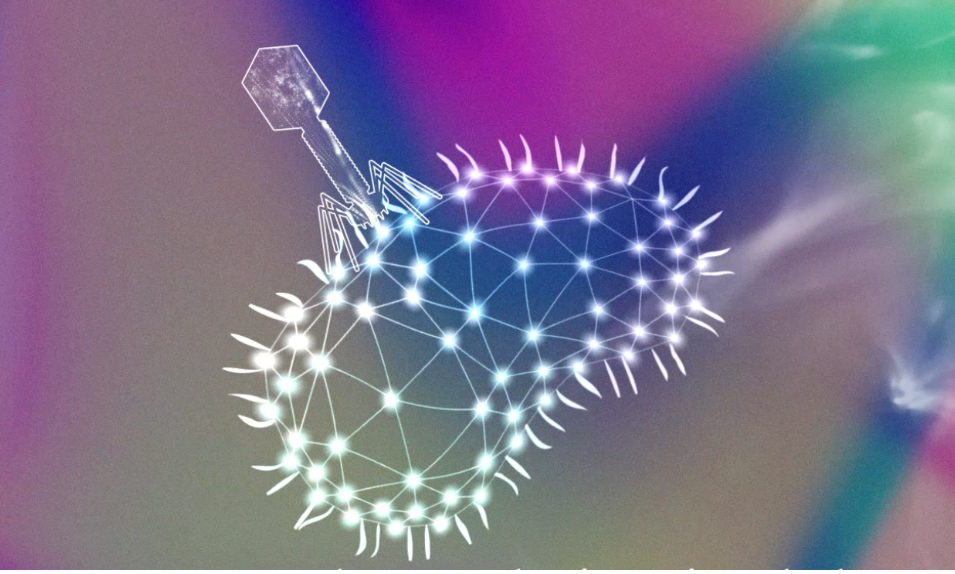
Les bactériophages, vers une alternative ciblée aux antibiotiques
Avec l’essor des antibiotiques dans les années 1930, la phagothérapie a été abandonnée. Aujourd’hui, la montée de l’antibiorésistance rend le traitement des infections bactériennes de plus en plus difficile et la phagothérapie suscite à nouveau l’intérêt des médecins...

26 Highly Cited Researchers 2024 : 26 citations pour l’université Paris Cité
Avec 26 mentions en première affiliation, l’université Paris Cité assoit sa position qui confirme l’influence de sa communauté de recherche au niveau mondial. Université Paris Cité félicite ces 26 highly cited researchers. Lire la suite 26 Highly Cited Researchers 2024 : 26 citations pour l’université Paris Cité
![[Retour sur la conférence La Guilde] L’Intelligence artificielle dans l’enseignement supérieur et la recherche : débats et perspectives](https://wordpress-test.app.u-pariscite.fr/wp-content/uploads/2024/11/Allassonniere_Loupy_1920-1-1080x675.jpg)
[Retour sur la conférence La Guilde] L’Intelligence artificielle dans l’enseignement supérieur et la recherche : débats et perspectives
Le 6 novembre 2024, l’université Paris Cité et l’Université PSL ont réuni les communautés des universités membres du réseau La Guilde lors d’un événement consacré à l’intelligence artificielle et son impact sur les universités, au sein du PariSanté Campus. Stéphanie...